

Why WeBeWell
The need for prevention has never been greater.
Demand for mental health services is at an all-time high, and most students who struggle never seek help. WeBeWell is a proactive mental health prevention program that builds well-being skills early — before problems become crises.
The problem
There is a student mental health crisis.
The impact
The costs reach students, families and institutions.
For youth, mental health issues impede academic success and psychological and social development. In college, depression is shown to double dropout rates. For adults, mental illness brings significant reductions in earnings — on top of the costs of therapy, medication and hospitalization.
Where WeBeWell fits
The proactive middle — before crisis and as challenges arise.
Skills in the app. Connect in a group. Our curriculum, developed by Drs. Ed and Carol Diener and the WeBeWell team, draws on positive and clinical psychology, cognitive behavioral therapy, behavioral activation and mindfulness.
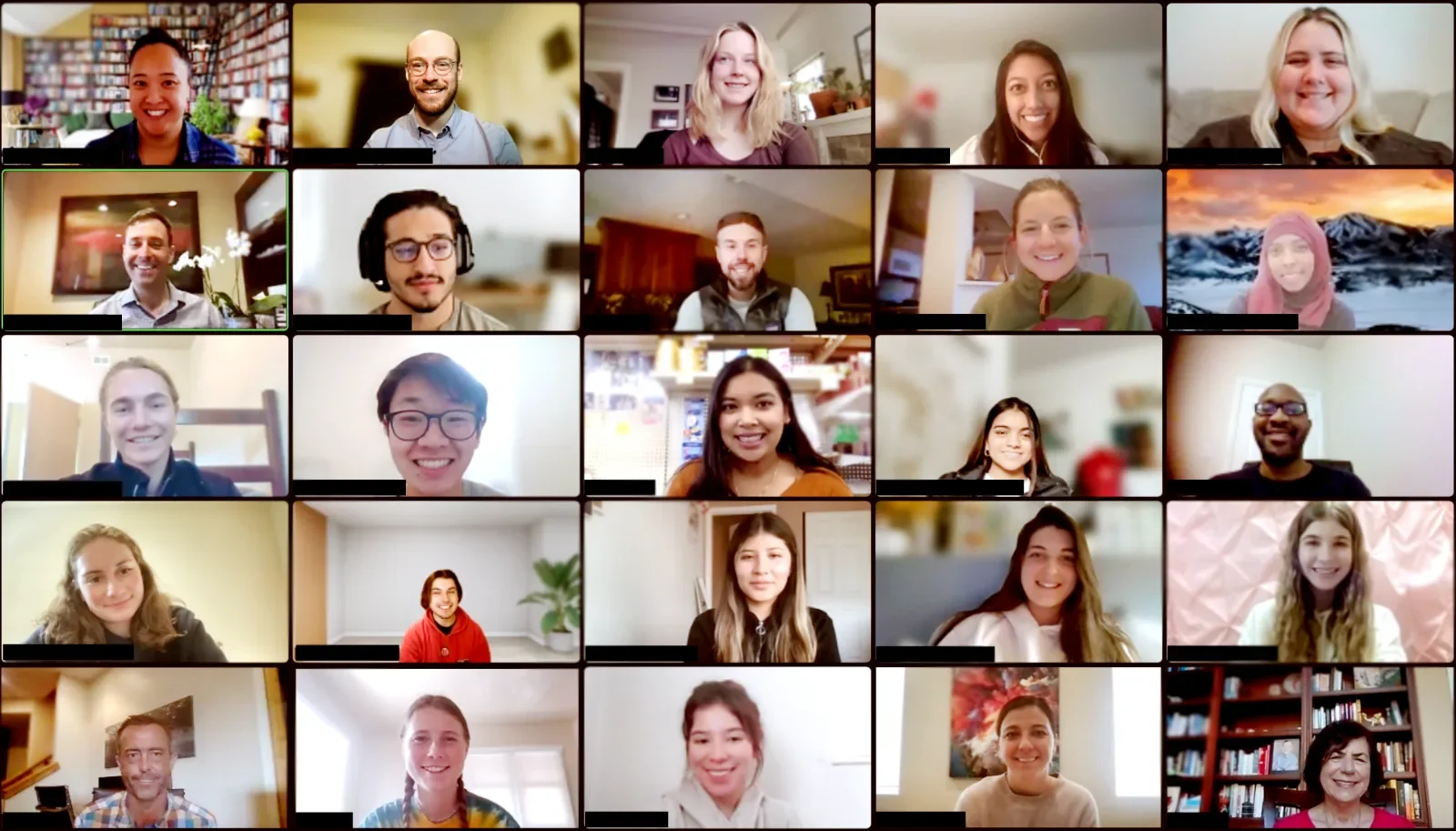
Small, live peer support groups on Zoom are led by trained facilitators and overseen by licensed clinicians. It isn’t therapy — it works alongside counseling, not instead of it.
60 minutes a week on Zoom · 6–8 weeks · the same cohort of ~10
Self-guided apps
- When it helps
- Anytime, on your own
- Human connection
- None
- Who it reaches
- Few in practice
- Published evidence
- Limited to apps alone
Counseling
- When it helps
- After distress
- Human connection
- 1:1 with a counselor
- Who it reaches
- Those who seek help
- Published evidence
- Established clinically
The curriculum
Skills people use for life.
Lessons follow a Learn, Practice, Reflect, Connect model — turning each topic into real habits of thought and behavior.
- Understand well-being and mental health
- Practice gratitude
- Identify and apply character strengths
- Set goals conducive to a flourishing life
- Build healthy relationships and communication strategies
- Practice mindfulness and meditation
- Understand how thoughts, emotions and behaviors connect
- Restructure negative thought traps into helpful narratives
Proven results
The numbers don’t lie.
Measured with college students, middle and high schoolers, and adults in randomized controlled trials.
University of Utah
453 college students, 2021–2023 Anxiety32.8%Depression22.0%Life satisfaction17.4% Pre- to post-test change in mean scores. Manuscript under peer review.For colleges Grades 6–12Middle and high schools
462 students, Fall 2021–Spring 2024 Anxiety24.1%Depression20.2%Resilience7.3% International Journal of Applied Positive PsychologyFor schools EmployersRandomized controlled trials
155 community adults aged 25–75 Sick days65%Depression38%Life satisfaction16% Kushlev et al., Psychological Science, 2020For employersFAQ
Frequently asked questions
What is WeBeWell?
WeBeWell is a preventive, evidence-based well-being and mental health program. Each week, participants learn a skill in the app, practice it, reflect on what worked, and meet in a small, live support group on Zoom to apply it.
Is WeBeWell therapy?
No. WeBeWell groups are psychoeducation support groups led by trained facilitators and overseen by licensed clinicians. The program works alongside counseling — not instead of it.
How much time does it take?
Groups meet for 60 minutes a week on Zoom for 6–8 weeks, with the same cohort of about 10 participants. Lessons and practice reminders are delivered in the app between sessions.
Who is WeBeWell for?
WeBeWell serves colleges and universities, middle and high schools (grades 6–12), and employers. The curriculum runs on iOS, Android and the web, and is easy to deploy through learning management systems like Canvas.
What does the research show?
In a University of Utah study of 453 college students (2021–2023), anxiety fell 32.8% and depression fell 22.0% from pre- to post-test. Randomized controlled trials of the curriculum behind WeBeWell showed a 38% reduction in depression and 16% increase in life satisfaction.
Who developed the curriculum?
Eminent psychologists Drs. Ed and Carol Diener and the WeBeWell team. It draws on positive and clinical psychology, cognitive behavioral therapy, behavioral activation and mindfulness.
Get started
Bring WeBeWell to your students.
Tell us about your students and we’ll be in touch. Or email hello@webewell.co.